I challenge you to think back to how quickly mobile technology exploded. Companies that invested in mobile before it became mainstream got a huge jump on their competitors. If someone told you that a new technology would be exploding within the next nine months, is that something that you’d quickly invest in to get an edge on your competition?
I recently interviewed Scott Westwater, a voice strategy expert and lead strategist for Pragmatic Digital to learn more about where we are in relation to voice technology and how digital marketers can use it effectively in their marketing strategies.
Westwater predicts that 75% of Americans will have a voice device in their homes sometime by the end of 2020.
Voice Technology- What do We Know About it?
During my conversation with Westwater, I learned that there’s a lot of interest in voice technology, but there aren’t a lot of practitioners out there on it and not a lot of information is forthcoming just yet. In fact, there aren’t even very many conferences available on it so far. To date, Amazon and Google are holding onto a lot of the information on voice technology and they’re not sharing it or selling it.
How Does Voice Technology Work?
The lack of information about voice technology has left a lot of digital marketers scratching their heads to figure out how to include voice technology as part of their digital marketing strategies. Of course, the primary question is, “How can we use content to direct voice traffic to websites?”
The answer to that question lies in understanding four points:
How to ask a question using the internet.
The types of answers the internet will deliver to you.
How to ask a voice device a question.
How voice technology delivers the answer to your question.
For example, let’s say you wanted to know more about how voice technology can assist seniors. If you were asking the question on the internet, you might type “voice technology seniors” or a similar phrase into an internet search box. What will the world wide web find for you? The internet will scrub the web for content and it will then pull up numerous pages of blog articles on how voice technology impacts the lives of seniors. You can then scroll down and select an article that will answer your specific question.
If you were seeking information on the same topic using a voice device, rather than pick a few words, you’d put your request in the form of a question such as, “Siri (or Alexa), how can voice technology assist seniors?” The device would answer you in a few complete sentences.
Where would the content from the voice activation come from? According to Westwater, voice technology generally pulls it up from sites like Wikipedia, Yelp, or rich snippets. If your company isn’t in a place where Google or Alexa can find you and connect you to the kinds of questions that voice-activated users are asking, you’re off the radar completely.
How Can Digital Marketers Tap into Voice Technology?
Westwater was able to walk me through a strategy to get a website back into the radar range.
The simple answer is that you need to provide relevant answers to the industry around your product. Before you get to that step, you need to take the time to do some research. Do a deep dive around social media and Quora to find out what consumers really want to know about your product or service. Try to find out how your product or service can be of use or help to consumers.
Don’t just write down the ways your product is useful, say it out loud. Your spoken answers will sound different than your written answers. Then, take your answers and actively promote them using all your channels.
The next step is to work on analysis and promotion. Are you asking the right questions? Can you improve your questions to steer them toward the answers they need? Did you miss anything? Start small and then scale your efforts. At this point, you’ll have a basis for adding in e-Commerce strategies.
How Can Marketers Channel Their Content to Siri and Alexa?
With some valuable insight from Westwater, I was able to discover the magic behind marketing to voice technology. Think of it as a three-step process:
Determine what your business objectives are.
Find out what questions people are asking about your product or service and create a matrix of those questions.
Use an app to build a voice experience.
At this point, it should be fairly easy to see where your business objectives overlap with the answers your customers are looking for. You would then go through a development process to record the audio files using your own voice or the voice of a voice actor. Alternatively, you could invest in a custom development program. Next, you upload your audio files into Siri or Alexa’s platform, and it will push your content when someone asks about it using their voice.
Sounds great! Right? Then, it occurred to me that this could be really expensive. I asked Westwater if this was something that only large, highly prosperous brands would be able to afford. I was pleasantly surprised by his answer. He said that it’s actually quite affordable for any size business especially when you consider the amazing return on investment.
Westwater provided the example of how large banking institutions rely on call centers for customer service. The reality is that somewhere between 30 to 50 questions that customers ask are probably the same, which means that a voice assistant or chatbot could probably answer them in short order. Westwater explained, “…if that results in a 1% reduction, that’s like $200 million back in their pocket.”
Consider these statistics:
Right now, between 80 to 130 million people already have voice technology in their homes.
The holiday season will add another 20 to 30 million people with voice technology.
That will make about 40% of Americans with voice technology in their homes.
The numbers are sure to increase rapidly in 2020.
Let’s take a deeper look at how voice technology works in practice.
What Does the Future Hold for Voice Technology and Healthcare?
When I mentioned that I was very interested in the benefits of voice technology for the healthcare, senior care, and the disability industries, Westwater became quite excited. He foresees that voice technology will soon revolutionize disease prevention and education.
At some point, voice technology could advance to a point where it could record a patient or senior’s symptoms and put them together over time in a way that offers an early diagnosis. Having the benefit of earlier detection will certainly lead to improved health outcomes.
Physicians, as trusted sources of medical information, could also educate their patients by recording answers to common questions about diseases and their symptoms. Patients develop trust in the technology because the information gets delivered in a voice they recognize and trust.
Why Is Voice Technology a Valuable Tool in the Senior Care Space?
When we think of the needs of seniors, it’s easy to connect the dots on how voice technology could be a game-changer in the quality of life for them.
Many seniors have had trouble learning how to use all the bells and whistles on their cell phones. As a result, they don’t use their cell phones as much as they could. However, most seniors are able to speak. Voice-activated responses can help seniors with:
Socialization and connection
Medical care
Memory care
Safety
Convenience
Many seniors struggle with loneliness and isolation. Voice technology can keep them company by playing their favorite music, reading an enjoyable book, connecting them with family or even telling them a joke.
Voice technology can remind them to take their medication or get some exercise. Seniors that have poor finger dexterity or poor eyesight merely need to speak their request to make a phone call or complete a task. They can tell Siri or Alexa where they put their keys and then ask the device where they put them later on if they forget. A senior could tell a voice device when they need to pay a bill and get a reminder.
They can also use voice devices to call out for help, much like a medical alert system. From the standpoint of convenience, they can ask what the senior care facility’s activities are for the day or what is on the menu without having to look it up or find their reading glasses. If they have both hands on their walker, they can ask their voice device to turn up the temperature or turn down the volume on the music without moving their hands from the walker. The possibilities for how voice can help seniors are as numerous as they are valuable.
Some Final Thoughts on Voice Technology
Voice technology is developing and evolving as we speak. It’s entering the mainstream at a rapid pace. The methodology behind using marketing content for the internet is vastly different than strategies for marketing content for voice technology. Digital marketers will have to learn how to incorporate voice technology into their digital marketing strategies.
The full impact that voice technology will have in the near future is yet to be seen. What we know for certain is that voice technology will soon revolutionize the way that we work, live, and play.
In today webinar I will cover the following topic:
How to execute Content and SEO strategies for B2B
The key to being successful in creating SEO and Content Marketing Strategies for Businesses is to understand the funnel and its stages:
Awareness
Consideration
Comparison
Conversion
Retention
In B2B we are trying to reach different personas and we need to create completely different content for each stage of the funnel.
We also need to understand that our keywords will behave differently as we move in the funnel. It is not the same to create content for the awareness stage than to create content for the retention.
Awareness Stage: Long tail keyword- informational keywords
Consideration: Specific terms- user intent
Comparison: competitor brand keywords-Long Tail
Conversion: Long Tail- Questions Keywords
Retention: Branded keywords, phrase keywords
From my experience with B2B clients. I know that users usually don’t convert in the blog. It is more likely that users convert in the service pages. But they learn about the products and services in the blog.
Services pages are transnational pages while blogs are informative pages.
Products and services are not linkable pages because they don’t offer value like blogs.
Then who will link yo these pages?
The answer is simple… Nobody!
On the other hand .. Blogs are the ones that can earn links. The blog is where our content marketing strategy plays a big role.
Users land on the blog and from there they begin to explore other pages, such as services/product pages, from here we generate most of the leads in B2B.
When we publish content that earns links we are working our way up to improve DA and that helps overall SEO. If our website is increasing rankings and earning keywords we have more chances of getting leads.
59% of B2B marketers say SEO has the biggest impact on their lead generation goals. (Marketing Charts)
SEO Process
Audit your site for technical problems
I use Screaming Frog and SEMrush(Project- audits)
Here we can find:
Canonical errors
Chain of redirections
Missing Meta Description
Missing and /or duplicate Title Tags
Broken Links
I highly recommend to fix all the technical as a priority- It doesn’t matter if we create amazing content if the site has major technical issues is very hard to rank
Tip: Make sure you have all the elements of On-Page SEO in place:
Content Audit
Check for cannibalization, thin content and duplicate content.
Here I Decide what content stay, what content can be combined and what should delete.
One time one of my clients had 25 pages with content around the same keyword. I could not believe it but I combine several pieces into a pillar page and I reuse the others ( I revamp them with a long tail, user intent, and phrase keywords ) I add those as clusters.
I know that we can have important terms that we want to rank for but it is important to structure the content in a way that makes sense, not just create a bunch of content without any strategy behind.
Tip: Run a content audit at the beginning of the project is very important because will give you a sense of your assets and what is missing even before you start to draft your Content Marketing Strategy. Here you can start mapping your strategy by discovering what part of the funnel needs more content.
Local SEO
Make sure that all your listing and citations are accurate.
TIP: In addition, you can create other directories (reputable and relevant only) profiles such as Angel List, Merchant Circle, Alignable, etc. (find a relevant in your niche and check the DA and make sure is no a spammy website)
Remember ..We need a mix of external links… no all links from directories… so don’t overdo it.
Make sure your website is mobile-friendly
I know that this is very basic but you can be surprised that many websites are no mobile-friendly
52% of buyers prefer mobile-optimized content. Then optimizing for mobile is a must thing to do.
Leverage Scheme Mark-Up
I used it and I have seen big differences. After I implement scheme my content performs better in Search Engine. This can help you to appear in Google’s Answer Box.
You can use a WordPress plugging:
Schema Pro
Schema App Structured Data
Secure your website with HTTPS: Nearly 21% of the Alexa Top 100,000 websites still don’t use HTTPS It is incredible the number of websites that are still in HTTP. When I have a new a client that has his website on HTTP version my first suggestion is to migrate it to HTTPS.
Optimize for Site Speed
This is a very important thing to check and fix. I used Google Lighthouse extension to run reports.
After I send the report to the developers to fix and improve site speed.
First Thing to Do
Identify who are my personas?
In B2B the decision is made by a group of people
At the opposite of B2C in B2B, I have to cater my message to different people in different parts of the funnel. I need to create powerful content for the top of my funnel to be considered by the CEO or CMOF of a company. For example, A startup that wants to build a new eCommerce site but they don’t know yet what platform to use: This is a very early stage. Will search for:
the best eCommerce platform
Best eCommerce platforms for start-ups
Best eCommerce platforms 2019
From these results, the director of the start-up will use this list to consider vendors.
On the other hand in the company that offers eCommerce platform doesn’t have content around this topic will be missing a big opportunity.
The Audience
Tha audience is a key in B2B and we must ask ourselves the following questions about the audience?
What information my audience is looking for?
What information is valuable to them?
We provide a response that will resolve their problems.
What benefits do we offer them- Content- Newsletters?
72% of B2B buyers turn to Google during the awareness stage (pardot.com)
Tip: Make sure you are creating content for all the stages of the funnel and for all the decision-makers.
Talk with the sales team and ask then who are the people that usually make the purchase decision.
If you don’t go the extra mile it is possible you will miss big opportunities lets say we write great content for the awareness stage but we haven’t create content for the comparison stage
For example:
E-commerce platform comparison
This will be a big mistake!
The Content Marketing Strategy is:
Create blogs:
Related to the products and services ( Not all the services that a client provide are the same -I will recommend picking the ones that have higher ROI)
Review of Service and Products pages:
Here I use the topic cluster approach. I make my mains services pages strong and I add sections to link to the related inner pages ( clusters). I will add a good set of keywords to each topic cluster. Also add links to catalog, price pages, testimonials, case studies, and everything that is relevant to the user.
Work in content to push conversions:
Tip: Be careful when you use email marketing and make sure you are sending related content no content that the subscriber doesn’t care about.
Ebooks, Reports, White papers – I will reuse them in the newsletter and in a segmented email marketing campaign.
At the moment of subscribing, you can offer a variety of topics to the user to pick a few. Then you segment the newsletter for optimal results
The content strategy must contain a mix of content
Static pages – Transactional Pages -These are my products or service pages
Blog section- Informative Pages -Create blogs to link to my product or service page
Authoritative Content – Interviews -We can interview reputable people in the industry and write an article about it. This will increase mentions, links, and shares
Prove expertise – Guest blog post -We can create an article that links back to our interview or any other blog and pitch another website to be a contributor.
Infographics -Many people don’t like to read but they love graphics – we can reuse content by creating infographics. W can also earn links by submitting the infographic to infographic websites.
Videos -Youtube is the second search engine- reusing text content in video format will provide opportunities to earn links and get more visibility.
Presentations -We can create a presentation from original research or any other data-based content. And submit these presentations to websites such as slideshare.com
Google remains the top source of traffic for blogs (growthbadger.com)
What type of content I can create:
Trending Topics in Pop Culture
Ex: in the Oscar Award time… A company that sells Nomex fibers can write an article for its blog about the movies that use Nomex solutions for its dangerous scenes (Nomex is a special material that is resistant to heat and fire)
Case study
Software that calculates how to allocate budget for marketing ( traditional and digital ) can create a case of how the software helps to maximize marketing budget to a specific client.
Industry Report
Expert interviews: I interview experts, actually I saw Craig in a SEMrush webinar after that I decided to connect with him on LinkedIn and interviewed him. I wrote an article in SEW, you guys can go and check it out is a really good article.
Guides
Indeed Employer Dashboard 101
Resources and How to Page
How to use Wix website editor
Calculators, quiz pages, etc.
The top 10% of SaaS blogs receive 104,000 visits each month from organic search (ek-byford.com)
Top-performing B2B blog posts include “the future of” you need data-driven articles and opinion articles. (buzzsumo.com)
How to create original content
Gathering data and write the conclusion of the finding
Survey – get a new response- conduct a study
Combine your data findings with other data
You need to find what is not yet said, stats- something fresh that people want to link to. It is a great way to contribute to the industry. This gives you the authority on the topic.
Surveys are one of the best and easy ways to get insights. There are many services that can help you with this such as:
Survey Monkey
Google Forms
I personally prefer Google forms because it is free (Survey monkey also has a free version) but Google forms offer more. You can create unlimited surveys with unlimited questions the only downside of Google forms is that has limited customization options.
Only 39% of marketing teams have published original research in 2019 – Source Buzzsumo.
39% is no big number is less than half. We should take advantage of this huge opportunity and work on original research.
Has your marketing team created and published original research in the last 12 months?
BuzzSumo
Why people don’t work in original research? It can be because of tales 2-4 months.
This is a time-consuming practice and that’s is the reason that only a few marketers are doing it.
Tip: If you plan to use research to earn backlink don’t limit your audience. Your audience are not your prospects only. Think about topics that are relevant to bloggers, journalists, influencers each and everyone that is involved with the industry. You need people to engage with your and link it to you.
76% of B2B buyers listed white papers as the material they were most likely to share with colleagues (demandgenreport.com)
Make sure you leverage your traffic. Create an engaging Newsletter sign up form
CTAs in your pages- Make things easy for users – Tell them what to do next
Offer Ebook, white papers- industry reports, etc.
It is really important to leverage your traffic. A well-segmented email marketing campaign and newsletter will increase conversions.
95% of buyers are willing to share their name, company and email address in return for content(demandgenreport.com)
Hustle Panda is a company that helps startups to find brandable .com domains
They do a great job with their newsletters.
1)Clear: Subscribers know what they will get
Frequency: Subscribers know that they won’t be spam daily with your emails.
This form don’t offer any value because don’t say what people what they will get and the frequency.
It is not attractive, it is too generic. Why people will subscribe?
89% of B2B marketers use content marketing (Content Marketing Institute)
But only 37% have a content marketing strategy in place ( no document it)
45% of content creation is done on an ad-hoc basis
A content marketing strategy that is no documented it is no scalable because we don’t have data to make future decisions. It is crucial to track our strategy in order to see what works and what doesn’t. When we identify the sweet spot is just rinse and repeat.
Create content without a plan is a waste of time and money.
Now comes the fun part- Keyword Research!
I like to do a deep keyword research- I want to make sure I am not missing any opportunity.
Ahersf keyword to define keyword difficulty – competition
I want to find key phrases, long-tail keywords
SEMrush
Magic Tool- I love this feature because on the left side show me tags that I can add to my keywords. I also can find question keywords. I love question keyword because these ones provide me a lot of opportunities to outrank my competitors.
Answer The public- This is a great tool and is free.
Keywords Everywhere extension. Very useful
Google Search
“People also ask” I used these phrases – question keyword ideas as subtitles H2 ( they work great)
”search related to” ( I try to add these keywords in my content as much as I can)
Google Console- Google Analytics ( hanging fruit keywords)
The anatomy of the page
Content that answers the questions
A good mix of keywords
Evidence – testimonials- case study links
CTA
This is a winner layout for a page. If we include all these components the page will generate leads.
What is the biggest SEO challenge for B2B? Backlinks.
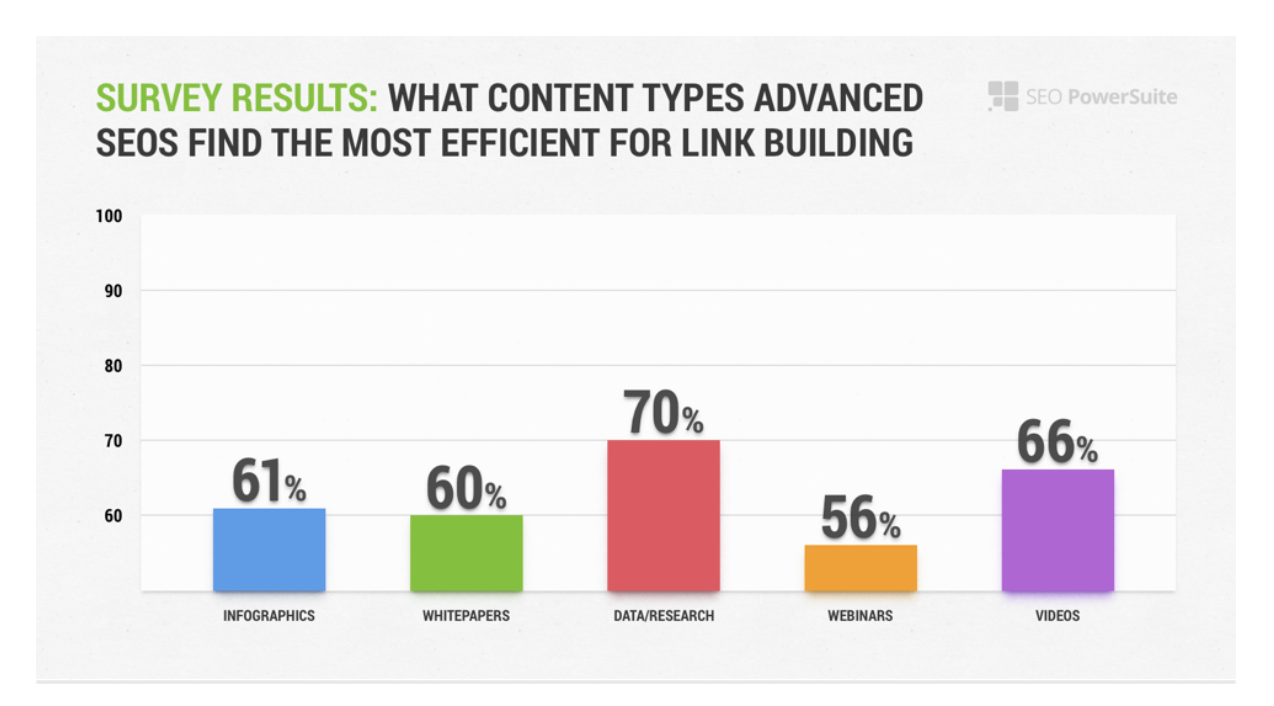
Data/ Research shows the higher rate to earn backlinks followed by videos and infographics. We must create content in different formats to maximize our chances to earn backlinks and increase DA.
Reuse content
We can reuse our content in different ways; For example
we can create an ebook from a series of blogs.
We can create an infographic version of our top rating blog
We can create a video from a blog or vice-versa
we can also create a playlist video from a set of blogs
The opportunities are infinite. It is just about planning and creativity.
Amplify content
Collaborate- relationships
Content Amplification:
Collaborate with influencers in the industry (journalist)
Outreach to let others know about your last original research content
Quora ads offer an interesting way to advertise based on topics, keywords or questions. I like to diversify my ads and test new options. Price per click varies. In my last campaign, I paid around $3 per click.
Linkedin ads. Are a great way to amplify your content and also get leads.
It is all about your goals. If you want to increase your email list you can offer a white paper. If you want to generate leads you can offer a special promotion on Linkedin and if you want to use it for awareness you can definitely use your content.
Linkedin is very powerful for B2b, the downside is that CPC can be higher than PPC.
I also love social media ads because are very affordable and provide results. These types of ads are great for awareness
. These efforts will generate referral traffic
We need connections to amplify content- How we will get these connections
Linkedin
( I have built most of my relationships via Linkedin) Don’t ask for anything but offer some value this is the first step to build a long term relationship. I personally hate how when people that I don’t know pitch me on Linkedin. Why they think I will buy service from somebody out of the blue- this is not the way. We build relationships first- we do things for others first then later I would ask. Many people use Linkedin as a new version of call calling.
Followerwonk
it a great tool that is connected with Twitter and allows you to find bloggers- influencers. I recommend it!
I love followewonk because has helped me a lot to find influencers. I worked with people that I have found with Followewonk and I have achiveded great results – links, mentions, etc.
Brand24
This is a very straight forward tool – You create a new project with brand and keywords and start to track mentions. It also allows you to engage)
Buzsumo
I use blogger or influencers in the filters
Attend events
This is a great way to know people in the industry; (Build relationships offline is powerful).
Take-Aways:
Fix all technical problems- This is basic
Make sure that all On-Page SEO Components are in place ( SEO 101)
Run Content Audit before start crafting your new content
( this will save you a lot of time at the moment to come out with ideas. It will also provide you with information to build powerful pillars and clusters based on what you already have).
Understand your personas and their role in the funnel
( This is a key to create the right content and to know where to focus for maximum results)
create custom content for each stage of the funnel
Don’t let anything un attendant- plan for success. If you find that you need to focus on awareness and also in nurture do it. Create content to target these pages and you will get results.
Use the blog as a tool to drive qualified leads to your transnational pages ( Service/Products). Set up proper goals in analytics to track this.
Create a mix of content
A good mix of content will attract the right links that will only help you with SEO but with relevant referral traffic.
Feature your client company as an expert on the topic by adding original content
This is a project but If you do at least 1 time a year you will see the results.
Amplify your content
Build long term relationships – build links
This is my favorite part. I really believe in long term relationships. I am a friend of people I work with. I am always keeping in touch with them. When it is their birthday I sent a small present a card, a text, It is important to show appreciation for people always no only when you need them.
Use the blog as a tool to drive qualified leads to your transnational pages ( Service/Products). Set up proper goals in analytics to track this.
Create a mix of content
A good mix of content will attract the right links that will only help you with SEO but with relevant referral traffic.
Feature your client company as an expert on the topic by adding original content
This is a project but If you do at least 1 time a year you will see the results.
Amplify your content
This is a must-do because if you don’t apply your content it doesn’t matter how great is your content nobody will read it.
Build long term relationships – build links
This is my favorite part. I really believe in long term relationships. I am a friend of people I work with. I am always keeping in touch with them. When it is their birthday I sent a small present a card, a text, It is important to show appreciation for people always no only when you need them.
Important !!
Something I want to add- is to be smart at the time to set up KPIs in B2B
We have some metrics we track in SEO such as traffic, sessions, backlinks count, etc.
But in reality, these metrics don’t mean anything for our clients.
Be clear when you work in a project and explain to your client in a simple way how you will build the content and where you think they should focus. Each client is different and has different priorities, sometimes are different from the ones we may recommend. I always listen to my clients before I map my content marketing plan. I create strategies to align with their objectives. Of course, I also give my extra recommendations because as a Digital marketer I see things they can’t see. I provide them with my suggestions to leverage the hanging fruit such as pages that have low rankings on the first and second page- when I see the opportunity to push these pages up with a little effort.
The KPIs I use for lead generation are:
Track white papers- ebook downloads.
Track every page that triggers a form.
Track all thank you pages
I want to know how many people went to the form vs how many people completed the form ( TK pages)
It is always something new we can test or learn!
The Goal; Increase DA – Rankings to beat the competitors-
https://karinatama.com/wp-content/uploads/2019/09/Webinar-with-Craig-Campbell.png5151045Karina Tama- Rutiglianohttps://karinatama.com/wp-content/uploads/2018/11/Logo1Karina.jpgKarina Tama- Rutigliano2019-09-04 20:55:192019-09-06 11:33:25{Webinar with Craig Campbell} Content and SEO Strategies for B2B
With mobile-indexing search at the head of Google’s ranking system, having the best mobile-friendly and optimized website is crucial now more than ever. To keep up, focus on creating the best micro-moment with these tips.
What Are Micro-Moments?
A micro-moment is a fairly new internet term. To sum it up, any time someone uses their mobile device to make a quick purchase, research something, or find a local business, that is a micro-moment. Almost everyone with a smartphone has looked something up while in the middle of a task, and it’s in these moments that people are most prone to make their decisions and perceptions.
Micro-Moments in Digital Marketing
What are micro-moments in marketing and how can you use them? Well, a micro-moment is all about user intent, and in order to meet that expectation, you’ll need to optimize your content for those quick Google moments people have throughout the day. A well-crafted micro-moment SEO plan will help solidify your rankings this year.
Internet Lingo
In order to help your audience quickly digest your content, you will need easy-to-read copy and blog posts. Not just that, but you will want to stay current with the internet lingo and what people are talking about now. It may even help to get a quick idea or emotion across by using an emoji or funny image with your content.
Emotive, catching text and visuals are important in defining your content and brand. Aim for those viral moments of video and imagery in your copy and blogs. Encourage reaction by asking open-ended questions and having a call-to-action towards the top of your content, in plain view. Keep the ability to share in mind, as those micro-moments are as easy to share.
Use conversational language that invites the reader in and helps answer any questions they might have. Keep in mind why people have micro-moments: they want to learn, do, see, or find something important to their search, so make it a point to answer questions related to those activities.
Time is Money
Micro-moments happen in bursts of intent. When people search for something, they want a quick and informative answer. Most likely, any solution or response that lasts longer than ten minutes won’t be the reader’s choice, so you will want to keep the internet’s notoriously short attention span into consideration. Don’t just keep the content short, though; keep it concise without losing too much information. You want to answer your reader’s questions as fully and with as few words as possible.
From another angle, you’ll want your content to stay timely and relevant. Keep up to date with holidays, news, and current trends in your field. Current searches don’t favor old results. This also includes current lingo and viral culture, as these trends seem to come and go in an instant.
Choose the Right Community
Choosing a niche of focus can be difficult. On the one hand, it can help to narrow your own scope of relation by keeping your content relevant to a couple of tags or trends on the smaller scale. Don’t aim too small, however; you want to find a sweet spot where your content won’t be looked over while still having enough readers for it to matter.
On the other end, you may consider tapping into the active and thriving communities of some larger tags or trends online. Your content may become bogged down by the wave of other posts, but these categories are popular for a reason. People are browsing in those key areas, and if you post to trending topics, it may help gain an audience.
Micro-Moments Take Away
Micro-moments in digital marketing are a new and complex strategy, but you can reach better SEO results with these tips. Mobile-first indexing has picked up on shortened audience attention spans, and micro-moment SEO is your way to work around it. Use micro-moments to win the shift on mobile and stay ahead of the game.
https://karinatama.com/wp-content/uploads/2019/04/micro-moments-in-digital-marketing-1.jpg400600Karina Tama- Rutiglianohttps://karinatama.com/wp-content/uploads/2018/11/Logo1Karina.jpgKarina Tama- Rutigliano2019-04-11 01:24:522019-04-11 01:24:52How to Use Micro-Moments in Digital Marketing
I used to work in the health care industry. I was the Digital Marketing Senior Manager at Caring People Inc. A home care company that helps seniors with daily living at home for over 20 years. Caring People offers personalized service in a very competitive market across four states. People often called-in at times of crisis – trust is the #1 priority on how we communicate to prospects online.
The challenge:
When I started to work for Caring People, the website was out of date, hard code. There was no content marketing in place and no strategy to generate leads. I started the digital marketing department and I was one team for all SEO, PPC, Email and Social Media.
Healthcare was a big challenge for me because my previous position was in e-commerce. I had to learn a new industry, educate Caring People CEO and stakeholders, and convince them to invest in digital marketing initiatives. I also faced another challenge since the sales team did not understand the value of digital. Therefore, I had to show them a new way to work with me as a team.
The Solution:
I suggested to create a new website. While the developers were working on the new website, I planned the strategy. I put a content marketing and SEO plan together. As a result, I created hundreds of local listings and more than 100 new blogs. I used long forms and topic cluster approach to earn competitive keywords. I also invested plenty of time vetting writers that had experience in the health care- senior industry. Finally, I also created SEO guidelines for the writers.
I started a competition with the sales team to collect reviews because I knew how powerful they are for local SEO and for generating leads, especially in health care. Furthermore, I created the buyer personas that were only three in caring people’s case. In addition, I migrated the old site from HTTP to HTTPs successfully. After the website was launched, I implemented the content marketing strategy by posting amazing regular content with videos and infographics.
Banklink Strategy to Increase DA and Traffic
Furthermore, I created a backlink strategythat allowed me to earn hundreds of backlinks. The website was earning between 30-40 backlinks a month.
The backlink strategy helped to increase Domain Authority- bring more traffic. As a result, Caring People generated double leads that before starting the backlinks strategy.
Finally, started a geo-targeted PPC campaign and used social media to amplify the content. Then, I set up an email marketing to follow up with organic and paid leads.
The Results:
After a few months that I launched the new site, I earned several Google Quick Answer Boxes for Caring People. I increased leads by 100%, the blog increased in 3 months, visits to 140% and Page Views to 150%. The organic channel grew at a much faster pace than all the other channels. I focused on organic traffic through content by using the BrightEdge platform. This helped me to get great keyword ideas for my content and for On-Page SEO.
I put Caring People on top of their competitors in search results. I also beat huge franchises with content marketing strategy for being well planned and implemented. Finally, one of my long-form content went viral and a group of corporations that wanted partnerships with us. Moreover, I worked together with them to create a new infographic in English and Italian for the European market. As a result, my piece earned hundreds of backlinks from reputable sites.
Caring People doubled their leads; its blogs increased exponentially in traffic and the brand received recognition across the Internet.
https://karinatama.com/wp-content/uploads/2019/03/Caring-People-Case-Study.png6321081Karina Tama- Rutiglianohttps://karinatama.com/wp-content/uploads/2018/11/Logo1Karina.jpgKarina Tama- Rutigliano2019-03-17 22:13:482019-09-19 16:39:21Healthcare Digital Marketing Strategy to Beat Big Franchises - Case Study
Take a moment to imagine the World Wide Web without URLs. It practically seems impossible, right? The basic Internet user as we know them today relies on URLs. It’s often how we tell a non-credible source from a credible source and how we specifically find brands and items we have an interest in. And businesses face yet another issue. Many of them have built their business on indexing and ranking web pages so that users can find them when completing a web search with certain keywords. What would really become of those businesses if URLs were no more?
It leaves us to question, why would Google, one of the most well-renowned search engines out there, consider offing URLs? And what would the World Wide Web universe look without it?
Why Google Wants To Kill URL
Although a world wide web without internet addresses seems a little chaotic, it’s being considered for one major reason: safety.
We’ve all come across a URL that looks a little questionable and hesitated on clicking the link. Most of us have even clicked on what appeared to be a legitimate link that led us to a phishing site. These spoof sites are specifically set-up to steal your passwords and other confidential information that you wouldn’t want anyone else to have. For instance, ‘G00gle’ and ‘Google’ look pretty similar at first glance; most victims wouldn’t notice that they’ve clicked the former until it’s too late.
If Google eliminates URLs and creates another way for sites to be identified, then the hope is that web identity will be more understandable for everyone. It should also cut down on the confusion between legitimate sites and phishing sites.
Web Identity and URLs: Already Less Relevant
Truth is, many of us are already used to not associating web identity with URLs, which makes us vulnerable.
One reason that web identity and URLs are less relevant is URL shorteners, which have become a big deal largely because of social media. For instance, the social media platform, Twitter, only allows users to use so many characters. A long URL would significantly take away how much one can enter into a post.
While short URLs are easy to remember and simple to share, they allow hackers to almost effortlessly mask illegitimate sites. Therefore, while it’s a convenient option, it also compromises our safety on the web.
Tools of Defense
Recently, the Chrome Team has been focusing on how to detect URLs that seem to deviate in some way from standard practice. One way they do this is by using, TrickURI, which helps developers check that their software is displaying URLs accurately. This software gives developers something to test against and helps them become familiar with how URLs look in different situations. This is important, as they don’t want to flag legitimate domains as phishing sites and vice versa.
In addition, it’s in the works for Chrome to start alerting its users when a URL looks illegitimate. Google users are already benefiting from the Safe Browsing platform, which alerts users if the system notices malicious behavior on a website. However, the system currently lacks the ability to flag sketchy URLs.
At one point, Google also operated its own URL shortening program as a way to decrease hackers. However, they later replaced it with Firebase Dynamic Links. This service uses dynamic links to send users anywhere within an Android, iOS, or web app, which makes it easier (and safer) to share specific content.
What Would No URLs Look Like?
Right now, it’s difficult for any of us to imagine what a World Wide Web without URLs really looks like. It’s even challenging for Google to fathom. However, what Google hopes to do in the near future is:
Figure out how to get users to focus on important parts of URLs
Parts relevant to their safety and security
Refine how Chrome presents URLs
Filter out what makes URLs challenging to read
Get Browsers to expand shortened URLs
To allow users to determine URL legitimacy
There’s still a lot of work to be done and an unclear vision of what no URLs looks like, but Google is adamant about keeping the Internet safe. In just one year, cyber attacks cost the world $600,000,000,000; which is astronomical. Safety is a growing concern as our society becomes more dependent upon the Internet.
https://karinatama.com/wp-content/uploads/2019/02/google-76517_640.png400640Karina Tama- Rutiglianohttps://karinatama.com/wp-content/uploads/2018/11/Logo1Karina.jpgKarina Tama- Rutigliano2019-02-15 22:28:192019-02-15 22:28:19The Internet Will Be a Safer Place- Google Wants To Kill The URL